


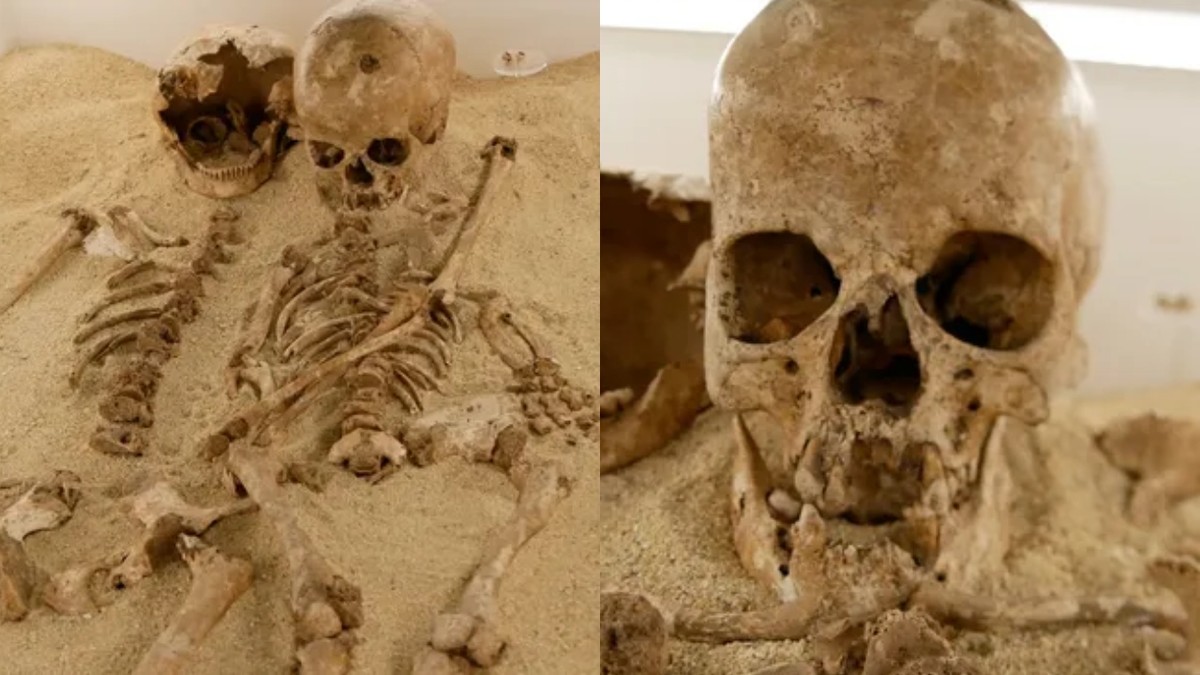
A recent study has revealed the extraordinary case of a teenager whose skeleton, dated to 12,000 years ago, was found in a cave in Italy. DNA analysis identified her as a girl suffering from a rare form of dwarfism known as achromelic dysplasia, specifically the Maroteaux type (AMDM), characterized by significant limb shortening.
The researchers regard this discovery as the oldest confirmed case of genetic diagnosis in anatomically modern humans, representing a major breakthrough for medical science. Adrian Daly, co-author of the study and endocrinology researcher at the University Hospital of Liège in Belgium, expressed his excitement to Live Science:
“As this is the oldest confirmed genetic diagnosis by DNA in humans, the oldest diagnosis of a rare disease and the oldest case of familial genetic conditions, it is truly a significant advancement for medical science. Identifying with near certainty a single base alteration in a gene in a person who died between 12,000 and 13,000 years ago is the oldest diagnosis of this kind in about 10 millennia.”
Study Details
Known as „Romito 2,“ the young girl was discovered alongside eight other prehistoric hunter-gatherers in the Romito cave, where her remains were unearthed in 1963. The AMDM condition results from mutations in both chromosomes of the NPR2 gene, which is essential for bone growth. Due to her condition, Romito 2 would have faced difficulties traveling long distances and navigating varied terrains, while restrictions on movement in her elbows and hands would have impacted her daily activities, Daly and his colleagues wrote in their study published in The New England Journal of Medicine.
Standing approximately 1.10 meters tall, Romito 2 was initially believed to be male based on earlier studies. However, DNA tests conducted on material collected from the inner ear revealed that she was, in fact, a female. Her burial was found in a fetal position next to another individual known as „Romito 1,“ who was also interred in the same cave.
Additionally, genetic analysis indicated that Romito 1 was closely related to Romito 2, possibly a mother or sister, and was below average height for adults of that time, measuring around 1.45 meters. Tests showed that Romito 1 possessed an abnormal copy of the NPR2 gene, which may have limited her growth, albeit not to the extreme observed in Romito 2.
Genetic Insights
The genetic analysis also confirmed that both belonged to the Villabruna genetic group, a population of hunter-gatherers that expanded from southern Europe to central and western Europe approximately 14,000 years ago. The researchers found no evidence of close consanguinity among the individuals from that region; nevertheless, they indicated that the population near the Romito cave was likely small.
The cause of death for both Romito 1 and Romito 2 remains unknown, as their remains show no signs of trauma. Furthermore, Romito 2’s diet and nutritional conditions were similar to those of the other individuals buried in the cave, suggesting that her community provided adequate care throughout her life, as reported by Live Science.
The researchers concluded by stating: “The challenges she faced were overcome by the support she received from her family group.”