



The highly anticipated „Gemini meteor shower“ will take place on December 14, 2025, offering an incredible opportunity for stargazers across the country. Recognized as one of the three major meteor showers of the year, the Gemini meteor shower is known for its high frequency, relatively slow meteors, and brightness. The astronomical observatory estimates that during the peak period, observers can witness up to 150 meteors per hour, making it an ideal time for beginners in astronomy to engage in this exciting activity.
Expecting a celestial display: peak activity and visibility
According to predictions from the Taipei Astronomical Museum, the active period of the Gemini meteor shower will extend from December 4 to December 20, with the highlight occurring on December 14. Although the theoretical rate suggests a maximum of 150 meteors per hour, in an area free from light pollution and with a clear view, observers can typically see around 100 meteors per hour. This impressive number is still significant for viewers in good conditions.
Meteors typically travel at a speed of approximately 35 kilometers per second, which places them in the medium-slow category. The majority appear in pale yellow or white hues, making them easily observable without the need for telescopes. While moonlight may interfere with visibility that night, the moon is expected to set around 2:30 AM, creating an optimal viewing situation afterward. For those wishing to avoid staying out too late, observing while facing away from the moonlight should provide a satisfactory experience.
Top viewing locations across the country
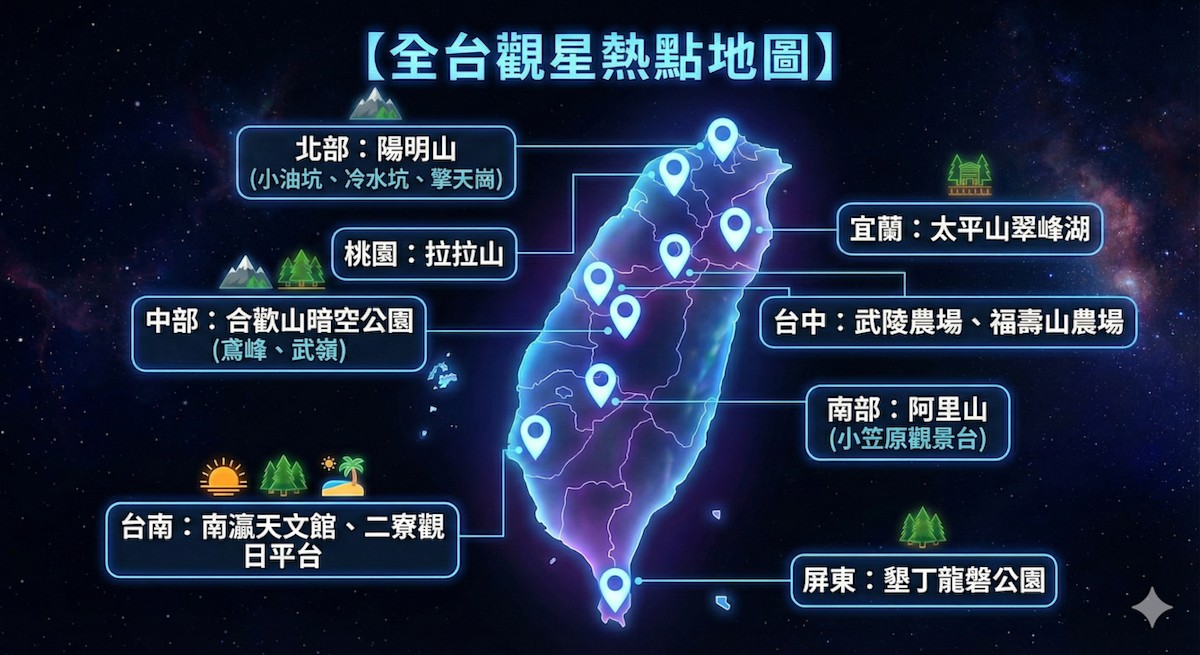
This report has compiled a list of the best locations for meteor watching in Taiwan. One notable spot is Hehuan Mountain in Nantou, home to the country’s first internationally certified „Dark Sky Park.“ Not only does the area benefit from zero light pollution, but it also features the „Yunfeng Stargazing Theater,“ where visitors can enjoy star projections. Accessibility is straightforward via the Taiwan Hop-On Hop-Off „Cingjing Line.“ Visitors can also participate in sheep shows and stroll along the skywalk during the day, seamlessly transitioning to stargazing at night.
The Tainan Nanying Astronomical Museum will hold free events on the night of December 14, including night lectures, stargazing tours, and even live-streaming from high-altitude locations. For those eager to catch a glimpse of the meteors, a flash observation session is scheduled for the evening of December 12 at the Erliao observation platform, complete with high-powered telescopes for a closer look.
In addition to the mentioned hotspots, other renowned stargazing locations include the Xiaoyoukeng area of Yangmingshan in the north, Wuling Farm and Fushoushan in central Taiwan, and Alishan, Kenting Longpan Park, and Taiping Mountain in the south.
Tips for capturing the moment with your mobile phone
For those looking to document the meteor shower with a mobile phone or camera, a sturdy tripod is essential; handheld photography is strongly discouraged. Photography experts recommend switching devices to „Pro Mode,“ increasing the ISO sensitivity, and setting exposure times between 10 to 30 seconds. Utilizing a wide-angle lens will significantly enhance the chances of capturing meteors. If the camera supports continuous shooting or time-lapse photography, viewers can set it up and relax with a warm drink while eagerly awaiting celestial surprises.
For those who prefer to stay indoors, the Taipei Astronomical Museum will host a live stream on its YouTube channel at 8 PM on December 14, allowing viewers to participate in the event from the comfort of their homes.